At what point does a person decide to halt a material’s natural growth process?
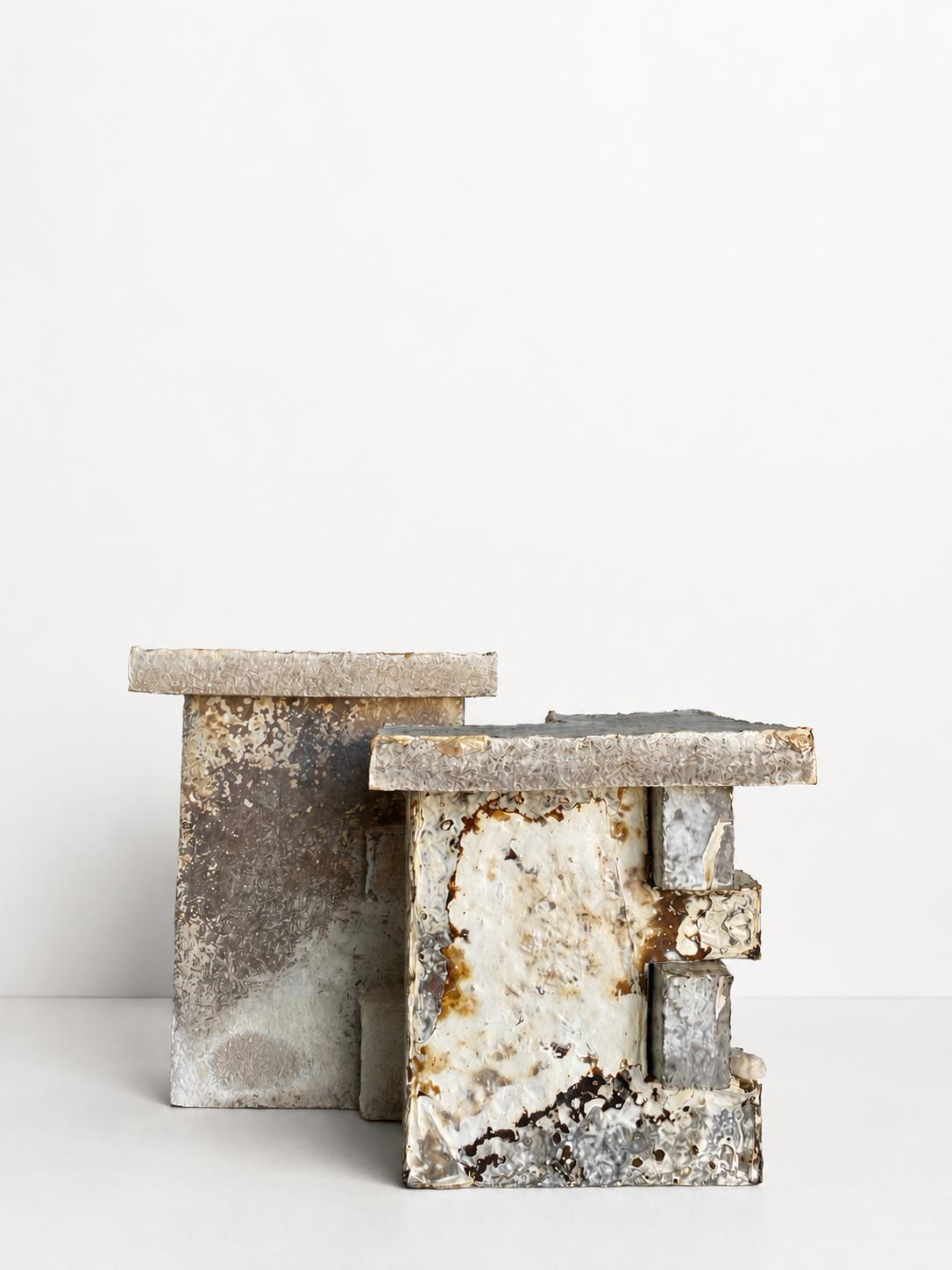
Taking mycelium as a living material as my starting point, I investigate how different parts of an object require varying degrees of control. Not every part of an object has the same relationship with the user. Some areas require stability, hygiene and predictability, whilst other parts have a more supportive function and can therefore allow room for biological autonomy.
I translate this principle into a system where human interaction determines where the growth process of mycelium is halted. In the case of a table, for example, the tabletop is baked to a finish because it is directly linked to use and functionality. The legs, on the other hand, have a more supportive role and therefore remain alive, allowing for the formation of mushrooms.The project thus raises questions not only about the use of materials, but also about our relationship with living matter within design. Where do we tolerate change, decay or growth? Which parts of an object must remain controlled, and which parts are allowed to evolve beyond human control? In this way, a tension arises between functionality and autonomy, between designed form and natural development.